Langley Locksmith Service Team
Local locksmith team
7 Oct 2026 11 min read
If you look at the front door of almost any house or flat in Slough — whether it is a Victorian terrace off Farnham Road, a 1970s semi in Langley, or a newer build near The Curve — you will likely see two locks, not one. Most homeowners know roughly which key opens which lock, but far fewer understand what is actually happening inside the door when they turn that key. That matters more than you might think, because the two locks do very different jobs, they fail in different ways, and your home insurance may depend on you having both fitted and working correctly.
This guide explains what a mortice lock is, how a nightlatch works alongside it, what the difference is between a 2 lever mortice lock and a 5 lever mortice lock, and why both locks belong on your front door. If you are locked out right now or need a lock change Slough, skip to the bottom and call 01753 251949 — but if you have a few minutes, read on and you will know exactly what to ask for next time.
## What Is a Mortice Lock, and Why Does the Name Sound Strange?
A mortice lock — also spelt mortise lock, particularly in older texts and online searches — takes its name from the mortice, the rectangular pocket cut into the edge of a door to house it. Unlike a surface-mounted lock, a mortice lock sits entirely inside the door itself, with only a small faceplate visible on the door edge and a keyhole escutcheon on each face. This makes it far more resistant to being levered or forced than something bolted to the surface. When you turn the key, a solid bolt — called a deadlock bolt — shoots directly into a keep (a metal box) recessed into the door frame. There is no spring involved: the bolt only moves when you use the key, in either direction. That is what makes a mortice deadlock genuinely secure.
The number of levers inside the lock is what most people mean when they refer to quality. A 2 lever mortice lock is the most basic: it has two small internal levers that must align correctly before the bolt will move. A 2 lever mortice lock is cheap and simple, but it offers relatively low security and is not suitable for external doors on insured properties. A 5 lever mortice lock has five levers, is significantly harder to pick, and — provided it carries the BS3621 kitemark — is the standard that most UK home insurers require for front doors. If your policy documents mention a British Standard mortice deadlock, a 5 lever mortice lock to BS3621 is what they are asking for. Fitting or upgrading to one is one of the most common jobs our locksmiths Slough carry out.
## What Is a Nightlatch (and What Is a Rim Lock or Rim Cylinder)?
A nightlatch — often called a Yale lock, after one well-known manufacturer — is the spring-loaded latch most people use dozens of times a day without really thinking about it. It is a rim lock, meaning it is mounted on the surface (rim) of the door rather than inside it. The latch bolt is angled and spring-loaded, so it snaps shut automatically every time the door closes. From outside you need a key; from inside you simply turn a small knob or handle — which is why a door knob with lock and key is such a familiar sight on interior hallway sides of UK front doors.
The rim cylinder — the barrel you insert your key into — sits in a hole through the door and connects to the latch mechanism on the inside. What is a rim cylinder exactly? It is the cylinder-and-cam unit that translates the turning of your key into movement of the latch. Standard rim cylinders offer modest security on their own. The critical limitation of a nightlatch is that it latches but does not truly lock the door unless it has a deadlocking feature: without that, a burglar can sometimes slide a tool past the angled bolt. A double-locking nightlatch solves this, but it still does not shoot a solid bolt deep into the frame the way a mortice deadlock does. This is precisely why the two locks are designed to work together.
## How the Two Locks Work Together — and What Happens When One Fails
Think of the nightlatch as your convenience lock and the mortice deadlock as your security lock. You use the nightlatch every time you leave the house — the door pulls shut, the latch engages, and you are on your way. When you go to bed or leave for an extended period, you also turn the key in the mortice deadlock, throwing the solid bolt deep into the frame. That second action is what transforms a closed door into a properly secured one. Insurers know this, which is why many policies are voided if a claim arises and the mortice deadlock was not engaged at the time.
Problems occur in predictable ways. The nightlatch spring weakens over time and the latch stops catching cleanly — the door appears closed but is not secured. The mortice lock cylinder wears, the key becomes stiff or breaks in the barrel, or the bolt refuses to throw fully because the door has dropped on its hinges and the bolt no longer aligns with the keep. uPVC and composite doors add another layer: they use a multipoint locking system that is very different from either type described above, controlled by a euro cylinder that carries a known vulnerability called cylinder snapping. If you have a uPVC front door and have not checked whether your cylinder is anti-snap rated, that is worth doing today. For door lock replacement Slough across all these door types, our team carries the parts and experience to sort it on the same visit.
## uPVC Doors and Euro Cylinders — a Different Situation Entirely
Many homes in Slough built or refurbished in the past three decades have uPVC or composite front doors rather than timber ones. These doors do not use a traditional mortice lock. Instead, they have a multipoint locking mechanism — typically three or more locking points that all engage when you lift the handle and turn the key — controlled by a euro cylinder, the small oval barrel you can see on the face of the door. The euro cylinder is remarkably convenient, but a standard one can be snapped in seconds with a tool you could buy from any DIY shop. Cylinder snapping remains one of the most common methods used to break into UK homes, and Slough is not immune.
The solution for upvc door lock repair Slough is almost always to replace the euro cylinder with a TS007 3-star rated anti-snap cylinder, or a combination of cylinder and handle that together achieve 3-star rating. These cylinders are designed so that if someone tries to snap them, the sacrificial section breaks off at a point that leaves the internal mechanism intact and the door still locked. It is a straightforward job for a skilled locksmith but one that makes an enormous difference to your home's resistance to this type of attack. If you are unsure what cylinder is currently in your door, call 01753 251949 and one of our locksmiths can advise — or visit and assess it on the spot.
## Locked Out, or Time for a Lock Change Slough? Here Is What to Do
If you find yourself locked out Slough, the first practical step is always to check calmly: is there an unlocked window or back door, or a neighbour or family member with a spare key? If not, do not attempt to force entry yourself — beyond the obvious risk of injury, you can damage the door frame or lock in a way that makes professional access harder and more disruptive. Ownership or tenancy of the property is something our team will ask you to confirm before any work begins, which is standard practice and protects everyone. As a 24 hour locksmith Slough, we send a locksmith out straight away and are usually with you in around 30 minutes.
A lockout is also a natural moment to review whether your locks are up to the standard your insurer expects, particularly if you have recently moved in, changed tenants, or simply never checked. A lock change Slough — whether that means upgrading to a BS3621 5 lever mortice lock, replacing a worn nightlatch, or fitting an anti-snap euro cylinder — is often quicker than people expect and can be done during the same visit that gets you back inside. The final price depends on the lock type, the parts required, the time of day, and travel to your location: we confirm the exact figure with you before any work begins, so there are no surprises. For emergency locksmith Slough situations or planned upgrades alike, call 01753 251949 — we answer around the clock, every day of the year including bank holidays.
## A Quick Word on Exterior Door Handles and Knob Sets
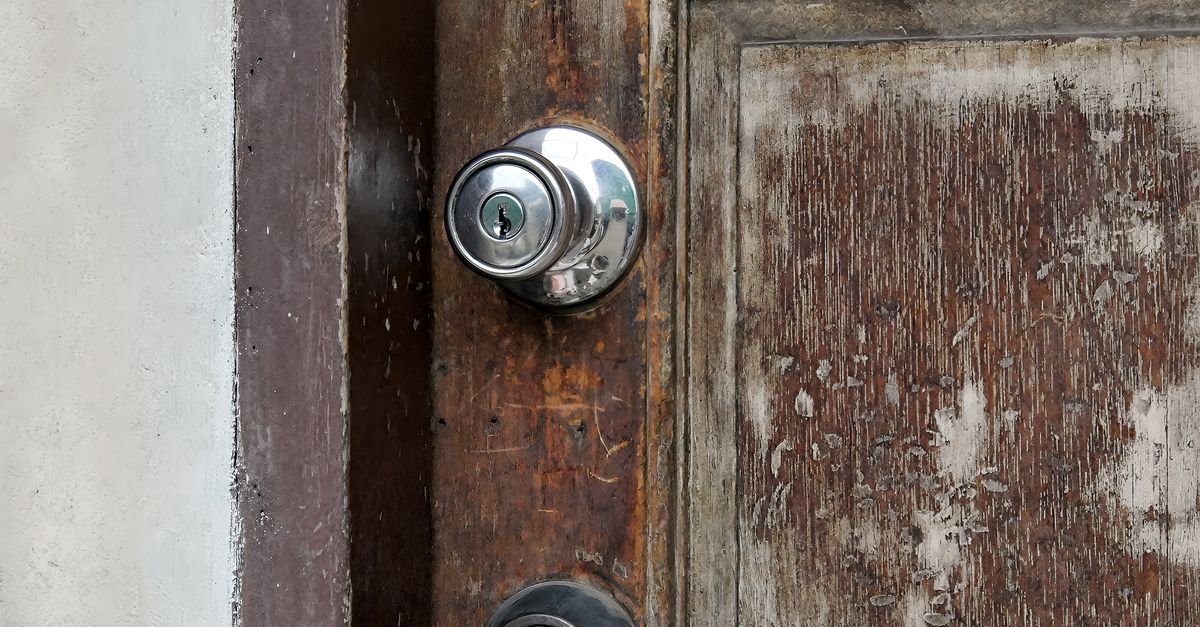
You may have seen listings or products described as an exterior door knob with lock and key — a combined handle and latch in a single unit. These are common on internal doors and in some older British properties, but on a modern UK front door they would not meet the security standard needed for insurance purposes on their own. An exterior door knob with lock and key can form part of a door furniture set alongside a separate mortice deadlock, but the mortice lock is doing the security work. If you are replacing or upgrading door furniture and are unsure what configuration you need, it is worth getting a professional assessment rather than buying hardware that may not align with your door thickness, backset measurement, or insurer's requirements. Our locksmiths Slough can advise on what will work for your specific door before anything is ordered or fitted.
Frequently asked questions
What is the difference between a mortice lock and a nightlatch?+
A mortice lock sits inside a pocket cut into the door edge and throws a solid bolt into the frame using a key — it only moves when you operate it deliberately, making it your primary security lock. A nightlatch (or rim lock) is surface-mounted and spring-loaded, snapping shut automatically when the door closes and releasing from the inside with a knob. Most UK front doors have both: the nightlatch for everyday convenience and the mortice deadlock for genuine security when the house is unoccupied or at night.
Does my home insurance require a 5 lever mortice lock?+
Many UK home insurers specify a BS3621 five-lever mortice deadlock on external doors as a condition of cover. The exact wording varies between policies, so check your documents carefully — look for phrases like 'British Standard mortice deadlock' or 'BS3621'. If you are unsure what lock is currently on your door or whether it meets your insurer's requirements, a locksmith can inspect it and confirm. Fitting a compliant lock where one is missing is a straightforward job for a qualified locksmith and could make a real difference if you ever need to make a claim.
My uPVC door lock is stiff or the key is hard to turn — do I need a full door replacement?+
Almost certainly not. Stiff operation on a uPVC door is usually caused by a worn or misaligned euro cylinder, a multipoint mechanism that needs lubrication, or a door that has dropped slightly on its hinges so the locking points no longer align cleanly. All of these are repairable without replacing the door. In many cases, fitting a new anti-snap euro cylinder resolves both the stiffness and any existing security concerns at the same time. If you are in the Slough area, call 01753 251949 and we can assess and usually resolve the problem during a single visit.
How quickly can a locksmith reach me if I am locked out in Slough?+
As a 24 hour locksmith Slough, Langley Locksmith sends a locksmith out straight away when you call. We are usually with you in around 30 minutes, though travel time can vary depending on where you are and what is happening on the roads at that point. We cover Slough and the surrounding area including Langley, Cippenham, Chalvey, Colnbrook, and nearby towns. Before anyone sets off, we confirm the exact price with you over the phone so you know what to expect — call 01753 251949 any time, day or night.